Award-winning
2019 Telstra Business Award

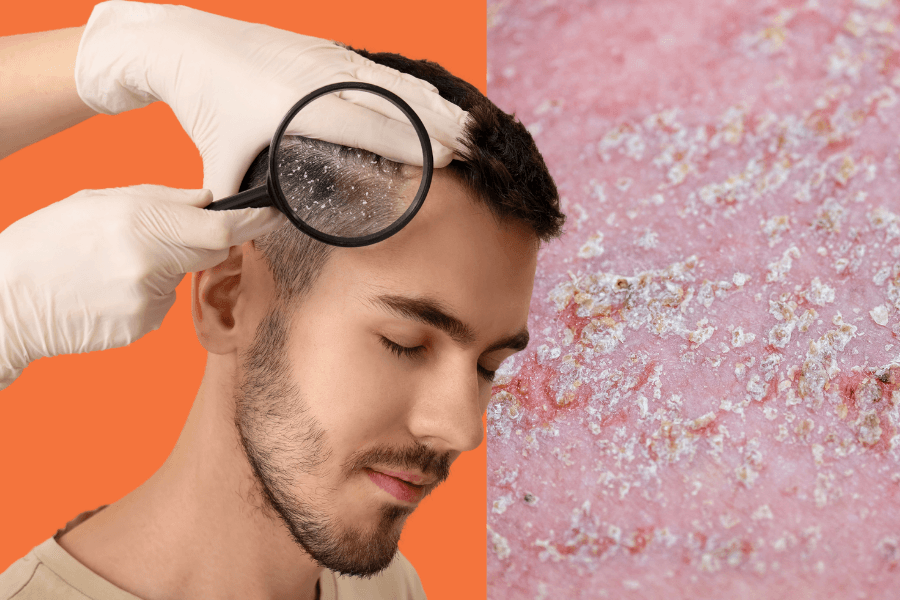
Another morning, another round of flakes on your shoulders. You’ve switched shampoos twice already. Maybe three times. And yet here you are. If that’s where you’re at right now, this article provides information that may be helpful.
Seborrhoeic dermatitis is often misunderstood.. People assume it’s about not washing their hair properly. Or that they’ve caught something. Neither is true — and if that’s been sitting in the back of your mind, this is not the case.
What it actually is: a chronic inflammatory skin condition. One that tends to flare without much warning, settle down again, and then come back just when you thought you’d sorted it. The scalp is the most common battleground, but it doesn’t stop there — the face, ears, chest, upper back, even the folds beside your nose can all be affected at different times.
It’s not dangerous. It’s not contagious. But it is, without question, can be bothersome and, in some cases, impact quality of life, particularly when it shows up on visible areas of the face. So let’s talk about what’s actually going on.
Seborrhoeic dermatitis — or seborrheic dermatitis if you’re reading anything from the US — is one of those conditions that sits in that frustrating middle ground between "serious enough to need treatment" but may be underestimated in its impact. Most Australians who have it just call it seb derm and get on with things.
It tends to develop wherever your skin produces the most oil. The scalp is the obvious one. But the sides of the nose, eyebrows, the beard area in men, the chest — all of these are oily spots, and all of them can be affected.
The part that frustrates people most is the relapsing nature of it. You treat it, it clears. Six weeks later, it’s back. That’s not the treatment failing — this is characteristic of the condition. Dermatologists call it a chronic relapsing condition, which sounds very clinical but really just means: it comes and goes, and this reflects the chronic nature of the condition. Knowing that upfront makes the whole thing easier to manage mentally.
Dandruff, by the way, is related to a similar underlying process — just without the redness and inflammation. When flaking tips into itching and irritation, that’s when dandruff becomes seb derm.
The underlying causes are multifactorial. There’s no single cause. It’s more of a combination — a few things happening at once that together create the right conditions for the condition to take hold.
A yeast called Malassezia plays an important role. And before that word sends you into a spiral — Malassezia lives on everyone’s skin. Everyone’s. It’s completely normal. The issue isn’t the yeast being there; it’s the fact that some people’s immune systems react to it in a way that causes inflammation. In oily skin areas specifically. Why this happens to some people and not others isn’t entirely clear. Genetics plays a role. So does immune function and how active your oil glands are.
Then there are the triggers — the things that seem to push a manageable situation into a proper flare-up:
Usually it’s not just one thing. It’s a stressful stretch at work combined with a cold snap combined with not sleeping well. And then your scalp — or your face — symptoms may become more noticeable.
Symptoms vary, but there are patterns.
On the scalp, flaking is usually the first sign. It can be light and powdery one time, thick and greasy the next. The flakes tend to have a slightly yellowish, oily quality — different to the dry white flakes of regular dandruff, which is one way to tell them apart. Itching is common. So is redness along the hairline. Inflammation may become more pronounced without management
On the face, the nasolabial folds are classic — those creases that run from your nose down toward the corners of your mouth. The eyebrows are another common spot, and so is the skin around and just inside the ears. Facial seb derm often gets mistaken for rosacea or just dry skin, which is part of why this may lead to delays in appropriate treatment before getting a proper diagnosis.
In babies, the same condition is called cradle cap. Thick, yellowish, crusty patches on the scalp. It may appear concerning but is generally harmless — it’s harmless and almost always clears up on its own within a few months.
This confusion is extremely common. In some cases, further assessment may be required to differentiate the two conditions. Both cause scalp flaking. Both can be red and itchy. Both are chronic. So how do you tell them apart?
The scales are different. Psoriasis plaques tend to be thicker, more raised, with a silvery-white appearance. Seb derm scales are greasier, softer, and more yellowish.
Where things sit matters too. Psoriasis tends to creep beyond the hairline — onto the forehead, behind the ears, down the back of the neck. Seb derm mostly stays within the hair-bearing area.
Check the rest of your body. Psoriasis frequently affects the elbows, knees, and lower back. If you’ve got scaling in those spots as well as your scalp, this may be a useful clinical indicator. Seb derm doesn’t typically go there.
And the edges of the patches — psoriasis plaques tend to feel raised and have fairly defined borders. Seb derm patches are softer and blurrier at the edges.
Still not sure? See your GP. A GP can assist with diagnosis and appropriate management, and treating the wrong condition for months is a waste of your time and money.
There is currently no cure, but symptoms can be effectively managed.
But there are treatments that work well, and most people find a routine they can stick with.
For scalp seb derm, an antifungal shampoo is almost often recommended as a first-line treatment. These are all available over the counter at Australian pharmacies:
One thing that catches people out: these aren’t regular shampoos. You need to leave them on for a few minutes — sometimes five, sometimes longer depending on the product. Lather, wait, rinse. The waiting is the part that actually does the work. Skip it and you’re mostly just washing your hair.
Facial seb derm is trickier. The skin is more reactive, so you have to be careful. Antifungal creams containing ketoconazole or clotrimazole can help reduce the yeast load without being too harsh. If the inflammation is significant, a GP might suggest a mild topical corticosteroid for a short period — but typically recommended for short-term use, not a long-term plan. Long-term steroid use on facial skin causes its own problems.
Calcineurin inhibitors like tacrolimus are may be considered if you need a longer-term option for the face — they work differently to steroids and don’t carry the same risks.
Tea tree oil comes up constantly in conversations about seb derm. The evidence is thinner than for antifungal treatments, but some people do find it helpful. If you try it, dilute it properly — neat tea tree oil on the scalp is more likely to cause a reaction than fix anything.
Fragrance-free cleansers, lighter hair products, and genuinely trying to manage stress all may help support symptom management. Diet? The evidence isn’t strong either way, but cutting back on sugar and alcohol is some individuals report improvement. It’s probably not going to hurt, and there are plenty of other reasons to do it anyway.
If you’ve been at it for four to six weeks with a proper routine and things aren’t shifting — see your GP. You should also seek medical advice if the condition is spreading or worsening. if things are getting more inflamed rather than less, if you’re noticing hair thinning, or if you’re just genuinely not sure what you’re dealing with.
GPs can confirm the diagnosis, prescribe stronger treatments, and refer you on to a dermatologist if needed. Worth knowing: Medicare rebates on specialist consultations generally require a GP referral first — so go through that process rather than attempting to access specialist care without referral.
If getting to a specialist feels like a logistical nightmare where you are, Dermo Direct is one option for accessing teledermatology services in Australia — an Australian teledermatology service that connects you with qualified dermatologists online. No waiting rooms. No long referral queues. If you’ve got a stubborn flare-up, or you just want a proper diagnosis before committing to a treatment plan, an online consult is a genuinely practical option for a lot of Australians, particularly those outside major cities.
For general skin health information, Healthdirect Australia is a reliable place to start. For more clinical depth, the Australasian College of Dermatologists and DermNet are both excellent.
Usually a combination of things — overactive oil glands, an immune reaction to Malassezia yeast, and triggers like stress, fatigue, cold weather, or underlying health conditions. It’s rarely one thing on its own, which is part of why it can be hard to pin down a clear cause.
A medicated shampoo is the most practical place to start for scalp symptoms — ketoconazole, zinc pyrithione, and selenium sulfide are all available without a prescription at Australian pharmacies. Leave the shampoo on for a few minutes; that contact time matters. For the face, a gentle antifungal cream may help. Give it at least four to six weeks of consistent use before deciding it’s not working. Still no improvement? Time to see your GP.
his varies between individuals. Ketoconazole shampoos like Nizoral are often recommended for their antifungal strength. Zinc pyrithione is a gentler option for maintenance. Have a chat with your pharmacist — pharmacists can provide helpful guidance.
Not permanently. But significant scalp inflammation — especially with a lot of scratching — can lead to temporary shedding. Once the inflammation is under control, hair growth generally returns to normal. If you’re seeing noticeable thinning alongside scalp symptoms though, mention it to your GP so other causes can be checked.
No, it is not contagious. The Malassezia yeast involved lives on everyone’s skin naturally — it’s not passed between people. You can’t catch seb derm from someone, and you can’t give it to them either.
In babies, cradle cap usually resolves without any intervention. In adults, the condition typically follows a chronic relapsing pattern. Seb derm tends to be a long-term, on-and-off condition. It might quiet down for months at a stretch, but for most people it comes back. A consistent management routine is what keeps it from becoming a bigger problem over time.
For mild to moderate cases, your GP is the right first stop — diagnosis, treatment recommendations, and a referral if needed. For faster or more direct access to specialist advice, Dermo Direct offers online dermatology consultations across Australia — may be a useful option if you’re in a regional area or just can’t get a timely in-person appointment. A GP referral, where you have one, may also make you eligible for a Medicare rebate.
Disclaimer: This article is for general informational purposes only and does not substitute for professional medical advice. For concerns about your skin health, please consult a qualified healthcare professional.