
6:00 am ‐ 11:00 pm.
After-hours, weekend and urgent appointments available.
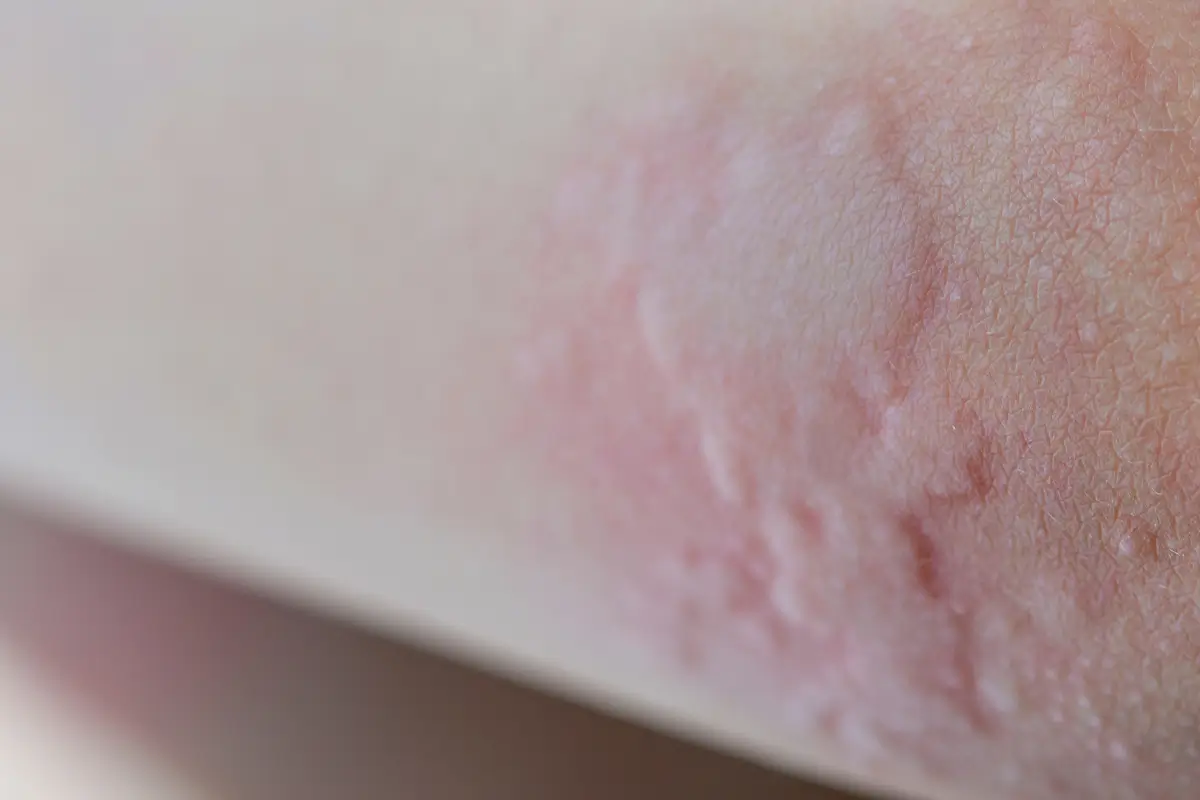
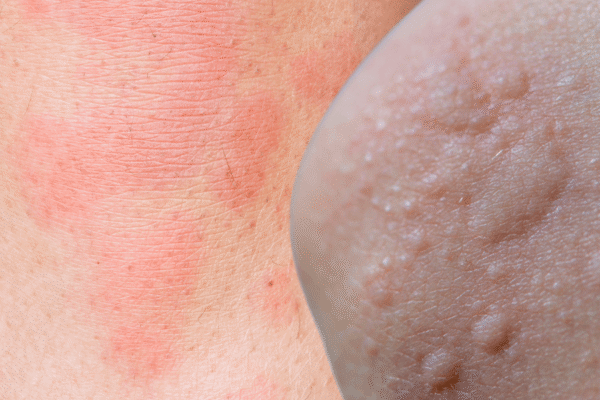
Urticaria, commonly known as hives, is a condition that causes raised, itchy welts on the skin. These welts can appear suddenly, change shape, and often come and go within hours.
In clinical practice, urticaria is something we see quite often. It can be short-lived (acute) or persist for weeks to months (chronic urticaria), and the experience can vary significantly between individuals.
While it can be uncomfortable and sometimes distressing, most cases are not dangerous — although identifying triggers and patterns can be important.
At Dermo Direct, dermatologists can assess suspected urticaria online and help guide appropriate management.
Urticaria occurs when histamine and other chemicals are released in the skin, leading to swelling and itching. Common triggers include:
In chronic urticaria, a specific trigger is often not identified, which can be frustrating.
You may be more likely to experience urticaria if you:
Diagnosis is usually based on:
In many cases, extensive testing is not required, particularly for acute urticaria.
With Dermo Direct, you can upload photos and describe your symptoms, helping dermatologists determine whether this is likely urticaria or another condition.

Treatment focuses on relieving symptoms and reducing flare-ups.
These are the mainstay of treatment.
If a trigger is identified, avoiding it can help reduce recurrence.
That said, in many cases — particularly chronic urticaria — a clear trigger isn’t found.
In some situations, short courses of additional medications may be considered to help settle more severe flare-ups.
For persistent or severe chronic urticaria, referral to a specialist may be recommended. This can include:
Access to these treatments depends on individual circumstances and clinical assessment.
Most cases of urticaria are not dangerous, but you should seek urgent care if you experience:
These may indicate a more serious allergic reaction (anaphylaxis) and require immediate medical attention.
Individual hives: Usually resolve within 24 hours
Acute urticaria: Days to weeks
Chronic urticaria: Can persist for months or longer
While chronic urticaria can be persistent, many people experience gradual improvement over time.
Urticaria can be unpredictable, especially when triggers aren’t clear. We often see patients feel frustrated by:
With the right management approach, symptoms can often be controlled effectively.

(08) 8432 1682
Office 6, Unit 2, 73 Hartley Street, Alice Springs NT 0870
Copyright © 2026 Dermo Direct Teledermatology Australia. All rights reserved. Privacy Policy. Terms of Service.