Maybe you’ve had a breakout that won’t quit, or a patch of itchy skin that’s been there since winter. You know you should get it looked at. Then you could see a dermatologist online, without travelling to a clinic. But you’re not sure whether telehealth is appropriate for your particular skin concern, or when an in-person appointment would be more suitable.
Fair question. Telehealth is an established part of healthcare in Australia, and it can be suitable for some dermatology and skin concerns. Not always, though. There are times when you really do need to be in the room with a doctor.
So let’s go through it properly: how an online appointment actually runs, what it suits, where it falls short, and how to make the most of it if you decide to see a dermatologist online.
Online dermatologist in Australia: how does a consult work?
It’s simpler than most people expect.
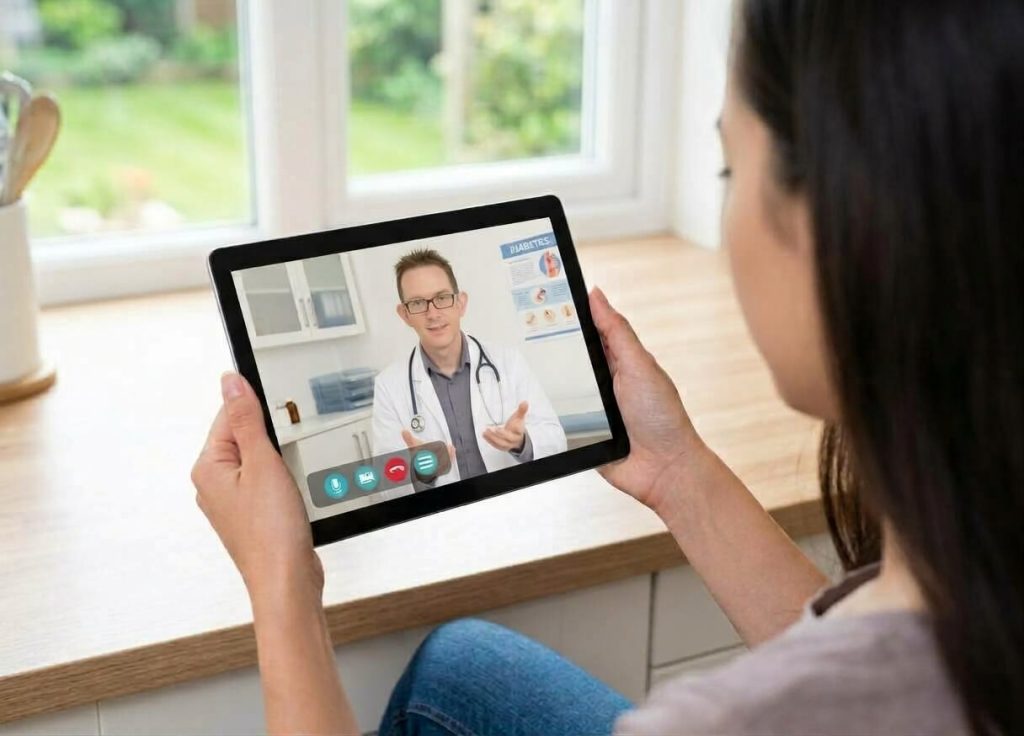
You pick a time and fill in a short form about your health. You’ll often be asked to upload a few photos of the problem area. Then, at your appointment time, you join a video call (some services use phone) and talk it through with the doctor.
They’ll ask the sort of questions you’d get in a clinic. When did it start? Does anything make it worse? What have you put on it so far? Be honest about that last one, even if the answer is “three different products from the chemist and some tea tree oil.” It all helps.
After that, you get a plan. If your doctor thinks a prescription is clinically suitable, it comes through as an e-script on your phone. An online dermatology consultation can avoid the need to travel to a clinic, although appointment length varies between providers and individual consultations. Telehealth is now a standard way to see many health providers in Australia, though it’s not meant to replace visits where a physical exam is needed.
Why see a dermatologist online?
Everyone’s reasons are a bit different. These come up most often.
Waiting lists
Wait times for in-person dermatology appointments can vary considerably depending on location, demand and appointment availability, and may be longer in some regional and remote areas. Telehealth may provide an alternative pathway for accessing dermatology care where clinically appropriate. Appointment availability varies between providers.
If symptoms are persistent or worsening, the appropriate timing and type of medical assessment will depend on the individual presentation.
Reducing travel and time away from your day
An in-person appointment may involve travel, parking and time away from work, study or other commitments. Telehealth can remove some of those travel requirements because the consultation takes place remotely.
Living outside the big cities
Specialist services may be less accessible in some regional and remote areas. Say you live a few hours west of Brisbane, or somewhere in regional WA. A specialist visit could mean a full day’s round trip. Telehealth can provide an alternative way to access a dermatologist without travelling to a specialist clinic, although suitability depends on the condition and the clinician’s assessment.
Sticking with it
Skin conditions are rarely one-and-done. Acne, rosacea and eczema tend to need a bit of trial and adjustment before things calm down. That’s where people often drop off, because booking another clinic visit feels like a hassle. For some people, remote follow-up appointments may make ongoing care more convenient, depending on the condition and treatment plan.
The awkward stuff
Some skin issues are just uncomfortable to bring up. Talking from your own home, on your own terms, can take some of the edge off. Some people may find discussing certain concerns from home more comfortable.
Scripts without the paper
If a prescription is clinically appropriate, your doctor may issue an electronic prescription where permitted. You can then have it dispensed by a pharmacy, subject to the prescription and applicable requirements.
A photo record you didn’t plan on
This is a nice side effect. All those photos add up to a timeline of your skin. Comparing photographs over time may help you and your clinician discuss whether the appearance of a skin condition has changed.
What can a virtual dermatologist help with?
Quite a lot, as it turns out. A virtual dermatologist regularly sees people for acne and acne scarring, rosacea and facial redness, eczema, dermatitis and psoriasis. Ongoing itchy skin and rashes are common too, and so are hair thinning, scalp problems and pigmentation such as melasma.
Clear photographs and a detailed history can provide useful information for assessing some skin conditions. If the information available remotely is insufficient, the clinician may request additional information, recommend an in-person examination, or advise another form of assessment.
Online vs in-person dermatologist: when should you go in?
This is the part that matters most, so here it is plainly.
Suspected skin cancer and full-body skin checks generally require in-person assessment. A spot that is new or changing, or one that is bleeding or otherwise concerning, should be assessed by an appropriate healthcare professional. Cancer Council Australia has a helpful guide on how to check your skin for changes. Some skin assessments require direct examination and, where appropriate, specialised equipment that cannot be used through a standard telehealth consultation. The same goes for biopsies, removing a spot, and procedures like freezing, laser or injections.
Some symptoms require prompt medical assessment rather than a routine telehealth appointment. That includes a rash that’s spreading quickly, is very painful, or comes with a fever. See your GP or go to the nearest emergency department. If it’s an emergency, call 000.
There’s also the middle ground. Sometimes you start online and your doctor decides they need to see you in person. That’s the system doing its job. The choice between online and in-person dermatology depends on the condition, the information available and whether a physical examination or procedure is required. It’s about choosing what fits the problem you’ve got right now.
How to get ready for your online skin consultation
Taking useful photos for your consultation
Clear, well-lit photos can make a remote skin assessment more useful. Bathroom lighting at night is usually the culprit. Stand near a window during the day instead. Take a close-up, then one from further back so your doctor can see where the spot sits on your face or body.
No filters, and take off any makeup over the area. Before you hit upload, zoom in and check it’s actually in focus. You’d be surprised how many aren’t.
Write a few things down
People tend to go blank once the call starts. Spend five minutes beforehand jotting down when it began, whether it comes and goes, and anything that seems to trigger it. Add what you’ve tried, any medicines you’re on, and any allergies.
Test your setup
Charge your device, check your Wi-Fi, and find somewhere quiet with half-decent light. Ten minutes of prep saves you from spending the start of your consult asking, “Sorry, can you hear me now?”
Do you need a referral to see an online dermatologist?
Not always, but it can affect what you pay.
If you want to claim a Medicare benefit for a specialist dermatologist consultation, a valid referral is generally required. Requirements can vary depending on the circumstances, so check the current Medicare and provider requirements before booking.
See a dermatologist online with Dermo Direct
Access to specialist dermatology can vary depending on location, demand and appointment availability. Dermo Direct provides an online pathway to dermatologist consultations for suitable skin concerns. With Dermo Direct, you can access online dermatologist consultations from across Australia, subject to clinician availability and the suitability of telehealth for your condition.
You can provide information about your concern and relevant photographs before the consultation, allowing the dermatologist to assess your presentation and discuss appropriate management options. And if it turns out you need to be seen in person, your doctor will let you know and help you figure out the next step.
Book your online skin consultation with Dermo Direct today.