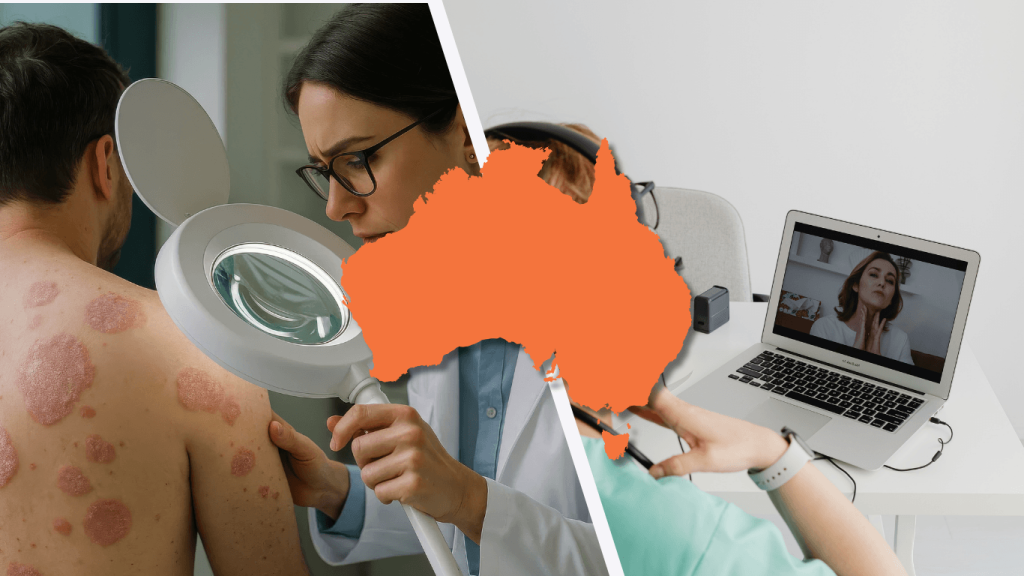
Trying to book with skin care clinics in Australia? It’s common for some clinics to have long waiting lists, then figure out how to take time off work without annoying your boss. That hassle hasn’t disappeared entirely, but at least now you’ve got other options.
The whole landscape’s shifted. Traditional clinics aren’t going anywhere—they’re still packed with people—but online dermatology has properly established itself as a legitimate way to get professional skin care. Which leaves you with an actual choice to make. Let’s unpack what each one really involves.
The traditional clinic experience
A traditional skin care clinic is exactly what you’d picture: an actual place you drive to, park at (and probably pay for parking), then sit in a waiting room flipping through magazines from 2019.
These clinics range massively. You might find yourself in a boutique practice where one dermatologist sees patients three days a week, or you could be at a sprawling medical centre where they’ve got multiple specialists and treatment rooms buzzing with activity.
The focus varies too. Some places are strictly medical—they’re there to treat acne, eczema, manage psoriasis, or other skin conditions. Others lean heavily into cosmetics: peels, lasers, injectables, the works. Then there’s plenty that straddle both worlds.
What’s the draw? Well, you’re physically present with someone who can examine your skin directly. They can touch it, look at it under proper lighting, use specialised equipment if needed, and potentially treat things right there in the room. For a lot of people, that face-to-face interaction just hits differently. Many people find reassurance in having a clinician assess their skin directly and discuss treatment options in person.
Online dermatology—What’s actually involved?
Teledermatology, online dermatology, virtual consultations—call it whatever you want, but it’s taken off big time these past couple of years. How it works is pretty basic: you’re still seeing proper qualified dermatologists or skin practitioners, just doing it through your phone or computer rather than driving to their office.
Here’s what normally happens. You take a few photos of the problem area, answer questions about what’s been going on and your medical history, then a registered practitioner goes through everything and sends you their diagnosis along with how to treat it. Some do video calls if you want that face-to-face feel, others keep it simple with photos and written messages.
Services like Dermo Direct hook you up with Australian-registered doctors who can work out what’s wrong, write prescriptions, and keep track of how you’re going. One key advantage is the convenience—you can access consultations from home, work, or wherever you feel comfortable. —sitting at your kitchen table, parked in your car on lunch break, or lying in bed at midnight because that’s the first spare moment you’ve had all day.
It’s not pretending to replace in-person clinics entirely. But for a massive chunk of everyday skin issues? It can be highly effective for many common conditions, and it removes basically every logistical headache that makes people put off getting help.
Where the two approaches actually differ
Accessibility (and your sanity)
Let’s talk about the elephant in the room first. Getting into a traditional dermatology clinic in Australia is a nightmare. Waiting lists go on forever—weeks at minimum, usually months. I know someone who waited half a year just for their first appointment. Wait times can extend for several months in many areas. And if you’re out in regional areas like Bendigo, Ballarat, or Townsville? Your closest dermatologist could be a two or three-hour drive. That’s assuming you can find one who’s even taking new patients, which is its own battle.
Online services typically get back to you within 24 to 48 hours. Sometimes even faster. When you’ve suddenly developed a rash that’s spreading, or your teenage daughter’s acne has gotten dramatically worse before formal photos, or you’ve noticed a spot on your back that’s making you anxious—waiting three months isn’t really workable.
Then there’s the practical stuff. Traditional clinics operate during business hours. That’s manageable if you’ve got a flexible job or understanding employer. Less manageable if you’re doing shift work at a hospital, running your own business, wrangling multiple kids, or working in a role where ducking out for medical appointments raises eyebrows.
The money side of things
Specialist dermatology consultations aren’t cheap. You’re typically looking at $200 to $400 per visit, sometimes more depending on the clinic and location. Medicare rebates help if you’ve got a GP referral, but the gap payments can still hurt, especially if you need multiple appointments.
Online consultations usually cost significantly less. Many platforms charge flat fees that undercut in-person specialists by a substantial margin. Some bulk-bill entirely if you’ve got a referral. That difference matters. It’s the difference between getting help and deciding to just live with the problem because you can’t justify the expense right now.
Obviously, if you need actual procedures—cryotherapy, excisions, cosmetic treatments—you’re going to a physical location and paying accordingly. But for diagnosis, consultation, and prescription treatments? Online is generally much more affordable.
What they can and can’t do
Physical clinics win out when someone needs to actually do something to your skin. Biopsies, cutting things off, laser work, injections—you’ve got to be there in person for all that. Pretty obvious.
But here’s the thing most people don’t realize: most dermatology work is just figuring out what’s wrong and deciding on the right treatment. Acne, rosacea, eczema, psoriasis, fungal infection, contact dermatitis, seborrheic dermatitis, certain hair loss issues—doctors can assess all of these pretty accurately from good photos and talking through your symptoms. Then they prescribe what you need, whether that’s creams, tablets, antifungals, whatever works for your situation.
Research consistently shows teledermatology is highly effective for these common conditions. The diagnostic accuracy is comparable to in-person consultations for the conditions it’s designed to handle. Not everything, obviously. But most things? Yeah, it works.
Quality of care (The thing everyone worries about)
This is where people get unnecessarily anxious. “But is online care actually proper care?” Here’s the thing: quality has nothing to do with the medium. It’s about the qualifications and experience of whoever’s treating you.
Look, the good online platforms use proper Australian-registered doctors, dermatologists, and nurse practitioners. These aren’t random people—they follow the same rules and professional standards as anyone you’d meet at a physical clinic. Same training. Same legal hoops to jump through. Same consequences if they mess up.
The problem isn’t really about online being sketchy compared to clinics. It’s about knowing which services are running things properly and which ones aren’t. You want a platform that’s upfront about who’s actually treating you—names, registration numbers, qualifications, all of it. When that stuff’s hard to find or weirdly vague on their website, that’s when alarm bells should go off.
When you actually need to go to a physical clinic
There are clear-cut situations where rocking up to a clinic is the right call:
Complex or severe conditions. If your skin condition is complicated, involves multiple systems, or has a messy medical history attached, specialist face-to-face care usually makes more sense.
Surgical needs. Anything requiring cutting, stitching, or physical removal needs to happen in person. Fairly obvious, but worth stating.
Advanced cosmetic procedures. Botox, dermal fillers, laser resurfacing, deep chemical peels—these all require someone physically performing the treatment.
Diagnostic uncertainty. Got something unusual that’s stumping everyone? Sometimes that needs direct examination with dermoscopy or other specialised equipment.
Comprehensive skin cancer screening. While online services can assess individual suspicious spots, thorough full-body skin checks are typically more effective in person.
When online dermatology is the better shout
Online consultations particularly excel for:
Common inflammatory conditions. Acne, eczema, psoriasis, rosacea—these are bread-and-butter teledermatology. Highly treatable through remote consultation.
Follow-up appointments. Already on a treatment plan and just need to check progress or renew prescriptions? Online follow-ups save everyone time and hassle.
Time-sensitive concerns. When waiting weeks or months isn’t appropriate because you need answers reasonably soon.
Geographic challenges. Living rurally, having mobility issues, or otherwise finding physical clinic visits genuinely difficult.
Schedule conflicts. When finding time during standard business hours feels nearly impossible given everything else you’re juggling.
Prescription-based treatments. Many effective dermatological treatments are simply medications. The consultation determines what’s needed, then you get the prescription. Doesn’t require you to be in a clinic for that.
Using both approaches (which is totally fine)
Nothing says you have to pick one and stick with it forever. Plenty of Australians use both strategically.
Maybe you see a traditional dermatologist for your initial assessment of a complex condition, or when you need a procedure, then handle routine follow-ups and new minor issues through online services. Or you use online dermatology for most things, but book in-person appointments when something requires hands-on examination.
Your skin care needs will change. What makes sense now might not make sense in six months. Stay flexible.
Figuring out your best option
Still not sure? Run through these questions:
- How urgent is this? Do I need help this week or can I comfortably wait a month or two?
- Does my situation require physical intervention, or is it something that can be assessed remotely?
- What’s the travel situation? Am I looking at a quick drive or a significant journey?
- What can I realistically afford right now?
- How do I feel about digital consultations and sharing photos of my skin?
- Is this a brand new concern or ongoing management of something already diagnosed?
Your answers will probably make the right choice fairly obvious.
Bottom line
The choice between traditional clinics and online dermatology isn’t about one being inherently superior. It’s about matching the right tool to your specific situation.
Physical clinics offer hands-on examination, immediate procedures, and that tangible sense of being personally attended to. Online dermatology removes the barriers—cost, time, geography, availability—that genuinely prevent people from getting professional help when they need it.
Having both in-clinic and online options improves accessibility and encourages people to seek care earlier. You’re more likely to address problems early when getting professional advice doesn’t require major logistical gymnastics. And you still have access to specialist in-person care when your situation genuinely calls for it.
Whatever route you go, just don’t let skin concerns fester because getting help feels too complicated or expensive. Small problems become big problems when ignored. Your skin’s doing a lot of work protecting everything underneath it—making sure someone qualified checks it out when something’s off just makes sense.
Disclaimer: This article is intended for general informational purposes only and does not constitute medical advice. It is not a substitute for professional medical advice, diagnosis, or treatment. Always consult a qualified healthcare professional regarding any medical condition or symptoms you may be experiencing. Dermo Direct’s services are provided by AHPRA-registered dermatologists operating within Australian clinical and regulatory guidelines.