Award-winning
2019 Telstra Business Award

Hair diseases are a group of conditions that affect the scalp and hair follicles, often leading to hair thinning, hair loss, scalp irritation, or changes in hair growth.
Hair loss is extremely common in Australia, affecting both men and women at different stages of life. While some hair shedding is normal, ongoing or noticeable hair loss may indicate an underlying condition that can often be treated. The most common causes include:
With modern teledermatology services such as Dermo Direct, Australians can now have hair and scalp conditions assessed by a dermatologist online, often without needing to attend a clinic in person.
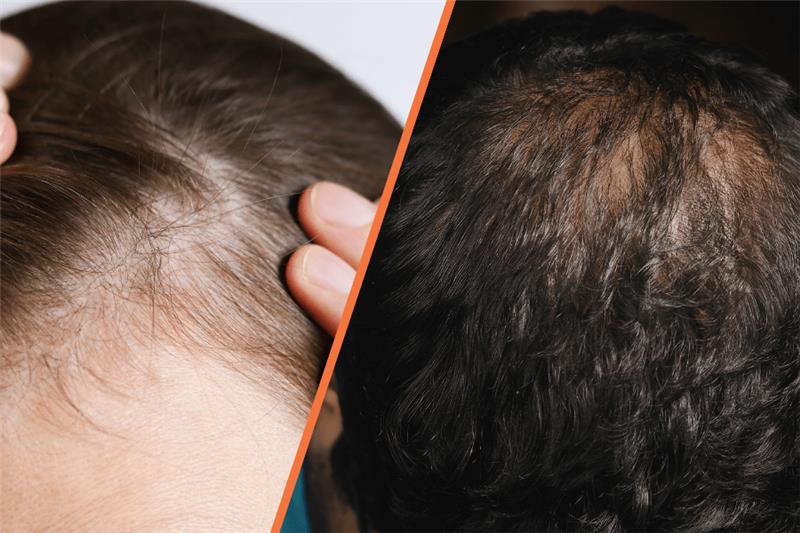
Hair diseases refer to medical conditions that affect:
These conditions may result in:
Hair diseases can be temporary or permanent depending on the cause.
Early diagnosis is important, as many forms of hair loss are treatable or can be slowed significantly when managed early.
Male pattern hair loss is the most common cause of hair loss in men. It typically presents as:
It is driven by genetics and sensitivity to dihydrotestosterone (DHT).
Female pattern hair loss usually appears as:
Unlike men, women rarely develop a completely receding hairline.
Hormonal factors, genetics, and age all play a role.
Alopecia areata is an autoimmune condition where the immune system attacks hair follicles.
In many cases, hair can regrow, but recurrence is common.
Telogen effluvium is a temporary condition where more hairs enter the shedding phase. Triggers include:
It usually presents as increased hair shedding rather than bald patches.
Hair loss can also be linked to scalp diseases such as:
These conditions may cause inflammation that disrupts normal hair growth.
Hair loss can occur for many reasons, often involving a combination of factors.
The most common cause of hair loss is inherited sensitivity of hair follicles (androgenetic alopecia).
Hormones play a key role, especially in:
Conditions like alopecia areata involve immune system activity targeting hair follicles.
Physical or emotional stress can disrupt the hair growth cycle, leading to shedding.
Low levels of iron, zinc, or protein may contribute to hair loss.
Hair loss should be assessed if you notice:
Early diagnosis is critical, particularly for conditions that can lead to permanent hair loss if untreated.
Dermatologists diagnose hair conditions using:
Because many hair conditions have distinct visual patterns, they can often be diagnosed through teledermatology consultations.
Treatment depends on the underlying cause.
Early diagnosis is critical, particularly for conditions that can lead to permanent hair loss if untreated.
Dermatologists diagnose hair conditions using:
A dermatologist will tailor treatment based on the type and severity of hair loss.
Some types of hair loss are reversible, while others can be slowed or stabilised.
Over 18,000 dermatology consults delivered.
14,000+ patients treated Australia-wide.
All dermatologists are registered with AHPRA.
Secure and confidential online platform.
Transparent pricing and clear treatment plans.