Award-winning
2019 Telstra Business Award

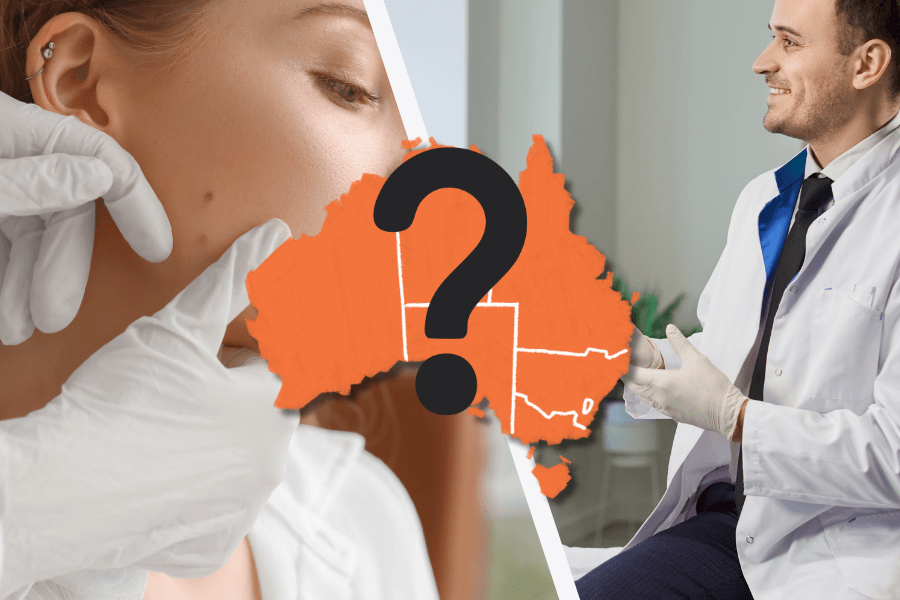
Online skin treatment for regional Australians isn’t just a nice idea anymore — for many people, it’s becoming essential. Mention the word "dermatologist" to someone living in rural New South Wales or outback Queensland, and you’ll likely get a tired laugh. Not because skin problems aren’t serious — they absolutely are — but because actually getting in to see one feels almost impossible when your nearest specialist is a four-hour drive and a six-month wait list away.
It shouldn’t be this way. But for millions of Australians outside the capital cities, that’s just how it’s been. You deal with it. You try what the chemist suggests. You wait and hope.
Teledermatology is starting to shake things up, though. And not in a gimmicky, tech-startup kind of way. We’re talking about qualified dermatologists reviewing cases, writing prescriptions where appropriate, and helping manage many skin condition — all done remotely. For people who’ve spent years making do, that’s a pretty big deal.
Specialists go where the population goes. That’s the brutal reality of healthcare in a country this size. Dermatologists aren’t going to set up shop in a town of 8,000 people when there’s a full patient load waiting in the city. Fair enough from a business standpoint, but it leaves a massive gap for everyone else.
Here’s what it actually looks like on the ground. You notice something on your skin — maybe a rash that won’t go away, or your eczema’s suddenly gotten a lot worse. You ring around. The nearest dermatologist is in a city two or three hours away. The earliest opening? Four months from now. Some places get a visiting specialist once a month, but those spots fill up before you’ve even picked up the phone.
Four months is a long time to wait with a skin condition that may be worsening. And if you need a follow-up after that first visit? Add another few months. The maths doesn’t work, and people know it.
Even getting to that appointment is its own headache. Fuel for a long drive. Maybe an overnight stay if the appointment’s early morning. If you run a farm or a small business, that’s a full day — sometimes two — of lost income. Arrange childcare. Organise someone to cover your shift. All for a twenty-minute consultation that might end with "let’s see how it goes and book you back in eight weeks."
Most people do the mental calculation and decide it’s not worth it. They’ll try another cream. They’ll deal with it. That’s not laziness — it’s a rational response to an irrational system.
And here’s the part that really stings. Skin conditions almost always need ongoing management. Psoriasis isn’t fixed with one prescription. Eczema flares need adjusting and readjusting of treatment over time. Acne might require switching between medications until something clicks.
That kind of care depends on regular follow-ups. When every follow-up means another mammoth trip, people just stop going. Their condition drifts. What started as something treatable becomes entrenched and harder to manage. It’s a cycle that plays out across regional Australia every single day.
People out in regional areas aren’t dealing with different skin problems than city folks. It’s the same stuff — acne, eczema, psoriasis, infections, rashes. The difference is what surrounds them. Harsher sun, drier air, dust, physical outdoor work, limited access to preventive care. All of it compounds the problem.
These three keep dermatologists busy no matter where they practice. But they hit differently when you can’t access proper care.
Take acne. People brush it off as a teenage thing, but severe acne left untreated scars. Literally. And not just physically — it wrecks confidence too, especially in younger people. Eczema thrives in the dry, dusty conditions that define a lot of inland Australia. Psoriasis needs consistent specialist management that a GP — despite providing excellent care — may not always have specialist dermatology tools or treatment options available.
What ends up happening is people stay on the same treatment for months or years, well past the point where it stopped doing anything useful. They don’t change because there’s nobody with the right expertise available to suggest something different.
Some skin issues don’t even have a clear name. You’ve got a rash that appeared six months ago and hasn’t budged. Or you’re dealing with itching that seems to flare up randomly. Your GP has tried a couple of things, maybe referred you to that specialist with the four-month wait, and in the meantime you’re just… stuck.
A dermatologist can often clarify the diagnosis more quickly. They’ve seen thousands of cases. They pick up on patterns a generalist might miss. But only if you can actually get in front of one.
Regional life comes with occupational skin risks that are easy to underestimate. Fungal infections from working in damp conditions. Contact dermatitis from chemicals, plants, or livestock. Sun damage that accumulates year after year. Inflammatory conditions that need identification before they can be properly treated.
Early diagnosis can make a significant difference with these kinds of issues. Catch a skin infection early and it’s usually straightforward. Leave it and you might be dealing with complications that take months to resolve.
The mechanics of teledermatology are a lot less complicated than people assume. It involves a simple phone or video call. No clunky software to download. It’s designed to fit into your life rather than the other way around.
You start by answering some questions online — what’s going on with your skin, how long it’s been happening, your medical background, any medications you’re taking. Then you upload clear photos of the problem areas. The whole thing takes ten or fifteen minutes, and you do it when it suits you. Could be at your kitchen table after dinner. Could be on your lunch break. Doesn’t matter.
This is where the real value kicks in. An actual dermatologist — a fully qualified specialist, not a chatbot or a nurse practitioner — goes through your photos and history. They assess it the same way they would in clinic, considering your specific situation before putting together a treatment plan that’s built around what you need.
People sometimes worry that a remote consultation can’t be as thorough as sitting in someone’s office. But for most skin conditions, high-quality photographs combined with a detailed history often provide sufficient information for dermatologists to make informed clinical decisions.
If your treatment plan includes prescription medication, it gets sent to your local pharmacy or posted directly to you. No chasing scripts. No extra trips.
Follow-ups work the same way as the initial consultation. You upload new photos, update your dermatologist on how things are tracking, and they adjust your plan if needed. The whole cycle of care happens without you leaving your property.
This is the one that changes the game. Suddenly it doesn’t matter that the nearest dermatologist’s office is three hours away. You’re accessing a specialist who could be based anywhere in Australia, and the quality of care doesn’t diminish because of where you’re sitting. Someone in Bourke can access specialist attention similar to someone in Bondi.. That’s never been possible before.
Without the constraints of a physical clinic — limited rooms, fixed hours, a single specialist serving a massive catchment area — online consultations are often available sooner — sometimes within days rather than months. And when your condition is active and worsening, getting a treatment plan quickly isn’t just convenient. It can be the difference between a straightforward fix and a drawn-out battle.
This matters more than people give it credit for, especially in smaller communities. Everyone knows everyone. The receptionist at the clinic might be someone you see at the school pickup. Some skin conditions carry embarrassment — rightly or wrongly — and the idea of discussing them in a local waiting room puts people off.
Online consultations strip that away entirely. Your skin, your home, your business.
Continuity is wildly undervalued in healthcare. In regional areas, you might see a different locum GP every couple of months. The specialist who visited last quarter might not come back. You end up re-explaining your history to someone new every single time, and nobody’s tracking the full picture.
Online dermatology fixes that. Same specialist. Same understanding of your skin. A proper ongoing relationship where someone’s actually watching how things develop over time.
Skin has terrible timing. A psoriasis flare-up doesn’t care that the dermatologist isn’t visiting for another five weeks. Eczema doesn’t politely wait for your next scheduled appointment. When something changes — after a bout of stress, a shift in weather, prolonged time in the sun — being able to reach your specialist quickly stops small setbacks from snowballing into major episodes.
Almost every skin condition responds better when you catch it early. Less acne scarring. More controlled psoriasis. Infections dealt with before they spread. The research backs this up consistently, and it makes intuitive sense too.
Online dermatology brings down the barriers that stop people from getting early help. You don’t have to wait until something’s unbearable before a specialist looks at it. You can act when you first notice something’s off — and that head start can improve overall management and outcomes
It’s worth being upfront about this — teledermatology can manage many conditions, but it’s not the answer to every skin concern. Knowing where it works best helps set realistic expectations.
Acne, rosacea, eczema, psoriasis, dermatitis — these are bread-and-butter teledermatology cases. They’re conditions where ongoing specialist management over weeks and months makes a measurable difference, and where the work mostly involves visual assessment and treatment adjustments. A perfect match for the online model.
If you’re managing something long-term, what you need is someone paying attention consistently. Not one appointment every six months followed by silence. Online platforms let you check in regularly, share how your skin’s responding, and keep your dermatologist across what’s happening — without the logistical circus of in-person visits.
No decent teledermatology provider will pretend they can handle everything remotely. If something needs a biopsy, a physical procedure, or an urgent in-person referral, your dermatologist will flag it and point you in the right direction. The goal has never been to replace face-to-face care completely. It’s about making sure the right things happen at the right time, and that you’re not burning weeks or months getting there.
If you’ve been putting off getting your skin looked at — because of the distance, the wait, the cost, or just because the whole process felt too hard — Dermo Direct was built around that exact problem. We connect Australians in regional and rural areas with qualified Australian dermatologists who understand the challenges of accessing specialist care outside major cities.
Getting started takes a few minutes. Upload your photos and medical history, and a specialist talks to you over the phone or video call and reviews your case and builds a treatment plan specific to you. Prescriptions come to your door. Follow-ups happen online. You stay connected with your dermatologist without rearranging your entire week.
Where you live shouldn’t determine how well your skin gets treated. With Dermo Direct, it doesn’t have to.
Disclaimer: The information provided in this article is intended for general educational and informational purposes only. It is not a substitute for professional medical advice, diagnosis, or treatment. Always seek the guidance of a qualified dermatologist or healthcare provider with any questions you may have regarding a skin condition or medical concern. Never disregard professional medical advice or delay seeking it because of something you have read on this website. Dermo Direct facilitates access to registered Australian dermatologists who provide personalised consultations and treatment plans. However, individual results may vary, and not all skin conditions are suitable for remote assessment. If you are experiencing a medical emergency or a rapidly worsening skin condition, please contact your nearest emergency department or call 000 immediately.